Change Automation Intelligence
IT-Conductor ChAI™ streamlines change management with our automation solution, designed to simplify the end-to-end execution of change requests. With real-time monitoring, intelligent insights, and automated workflows, you can achieve complete control and transparency throughout the entire change process.


Streamline SAP transport management with IT-Conductor ChAI for faster workflows, reduced risks, and complete change visibility. Learn More →
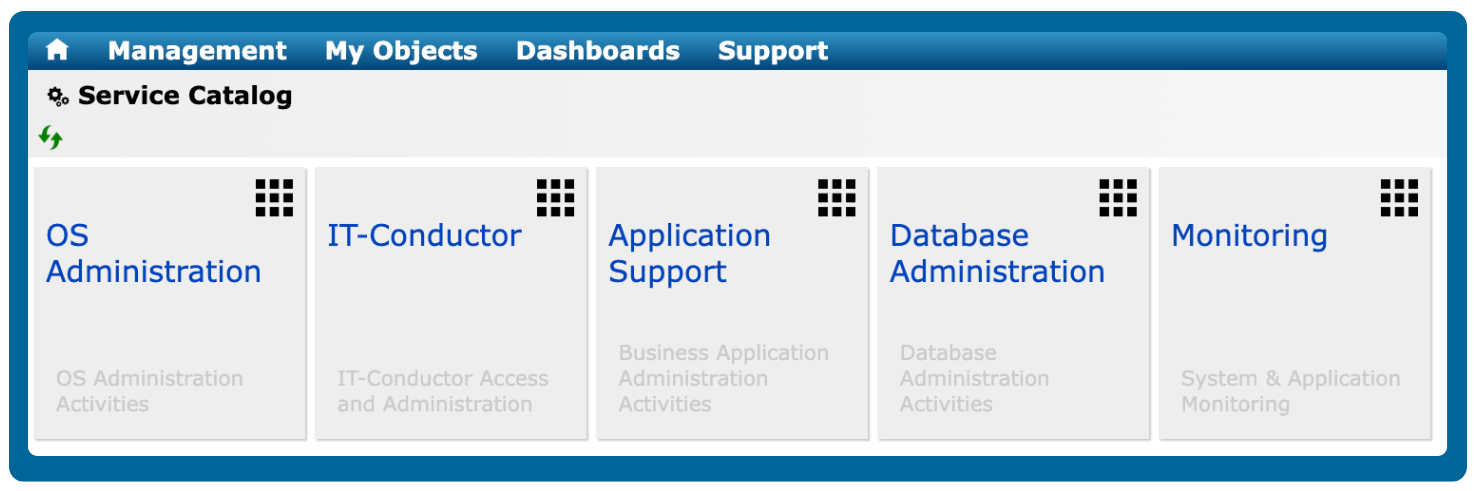
Initiate change requests in minutes through the service catalog
Effortlessly raise change requests through the Service Catalog, designed to streamline your processes. Whether triggering automated workflows or executing single activities like scripts, ChAI ensures fast, accurate, and efficient change management tailored to your needs.
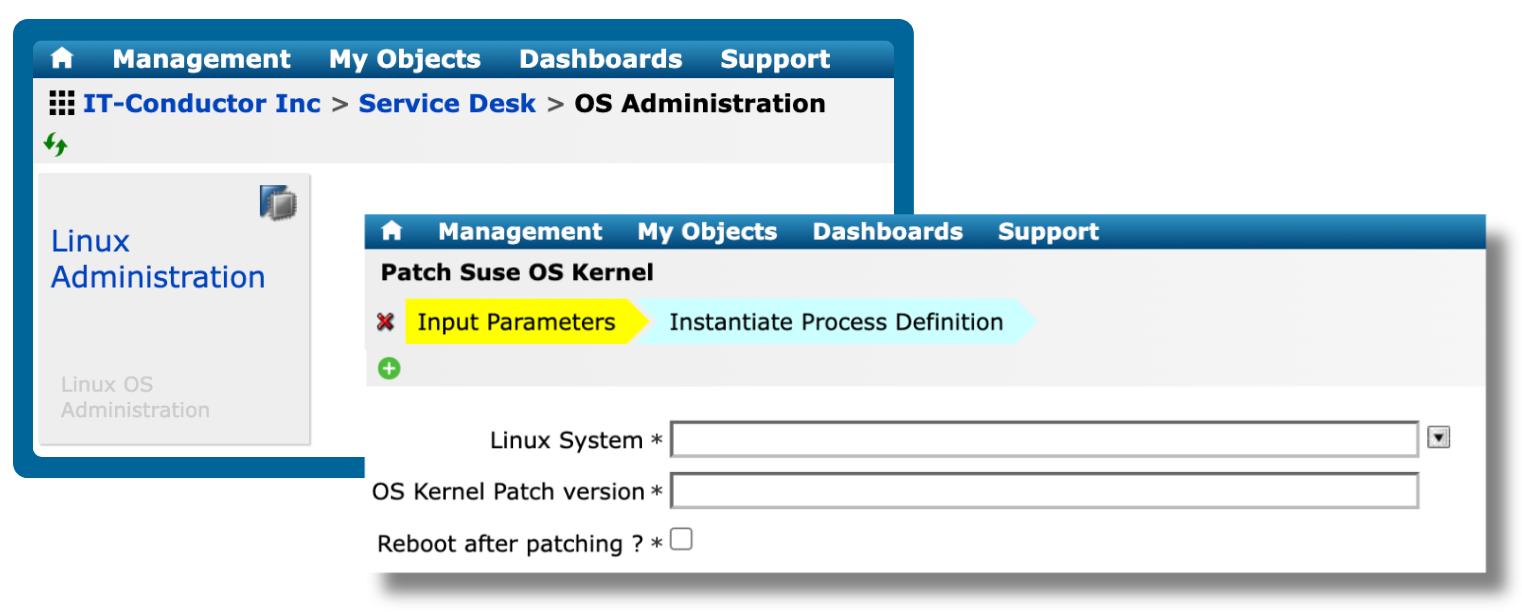
Simplify standard changes with configuration wizards
Leverage a rich library of pre-defined processes with configuration wizards that turn user input straight into action. Ideal for standard changes, these wizards bring true standardization, ensuring every change is consistent and streamlined.
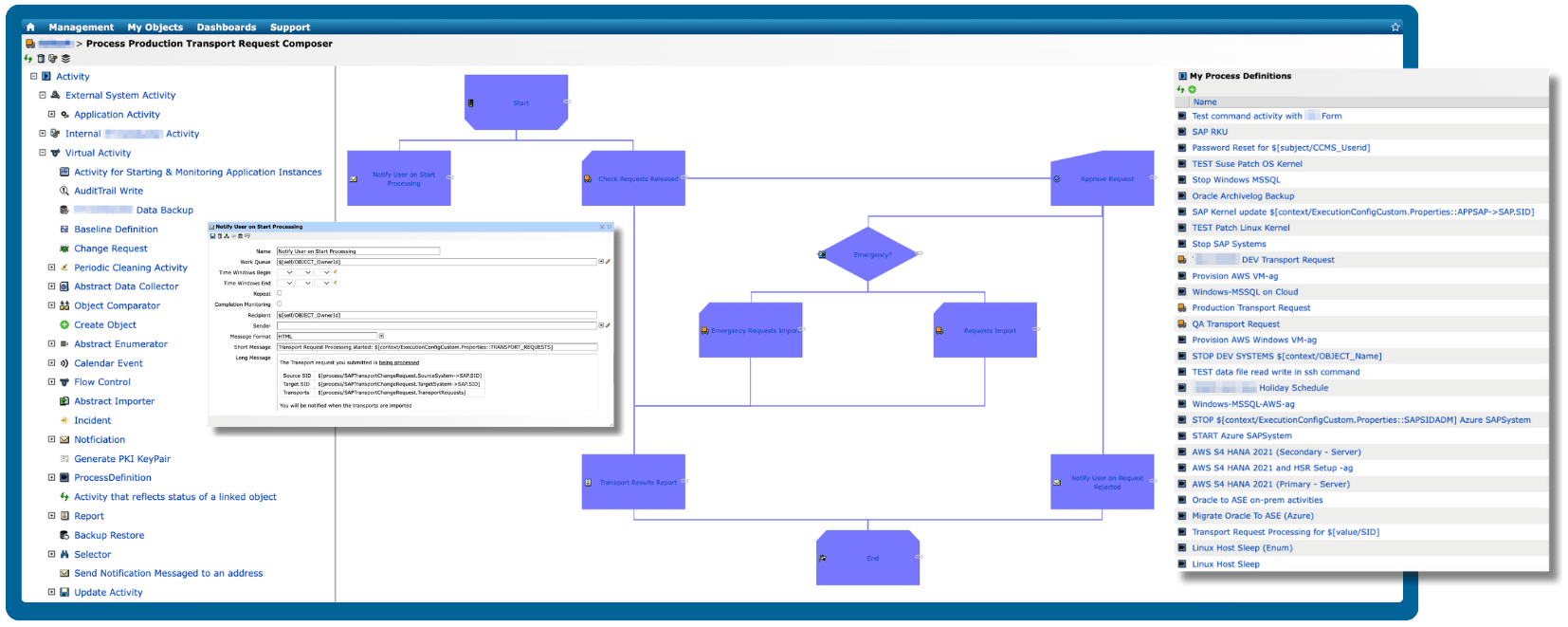
Intelligent automation for end-to-end change management processes
Streamline complex change requests with our highly customizable workflow orchestration tool. From initiating requests to notifying stakeholders, ChAI lets you cover the entire change management process, ensuring effective and efficient implementation of changes.
Watch IT-Conductor ChAI™ in action

Streamline SAP transport management
In large-scale SAP implementations with hundreds or thousands of transport requests, errors are inevitable, leading to incorrect object versions and potential defects in production. These mistakes can cause delays, extra costs, and jeopardize project success.
Implementing reliable process automation for transport management is essential to mitigate these risks. Automation ensures accurate management and seamless import of code and configuration changes, reducing errors and optimizing efficiency.
Trusted by leading brands worldwide

This tool has drastically improved the time it takes to get changes tested by the offshore team.
Frequently Asked Questions
What is change management automation in IT operations?
Change management automation in IT operations is the practice of automating the planning, approval, execution, and tracking of IT system changes. Instead of relying on manual steps, change automation ensures that updates, such as system configurations, deployments, or transport requests, are performed consistently, securely, and efficiently across environments.
By automating these processes, organizations can reduce human errors, improve compliance, accelerate delivery, and maintain full visibility over all IT changes.
Why is automating change management important?
Automating change management helps organizations reduce errors, speed up deployments, and maintain consistency across IT systems. It ensures that changes are executed according to policies, tracked for compliance, and fully auditable, which minimizes operational risk and improves overall IT service reliability.
How do I identify which change activities are suitable for automation?
Changes that are repetitive, rule-based, and high-volume are ideal candidates for automation. Examples include system configurations, SAP transport requests, user account provisioning, software deployments, and routine maintenance tasks.
Start by analyzing change logs to identify tasks that are time-consuming, error-prone, or that require multiple approvals, then prioritize them for automation to maximize efficiency and reduce risk.
Can automated changes include approvals and exception handling?
Yes. Modern change automation solutions can incorporate approval workflows, conditional logic, and exception handling to ensure changes are executed safely. For example, automated processes can pause for managerial approval, route exceptions for review, or trigger alternative actions if a step fails, maintaining compliance and minimizing risk while still streamlining operations.
What challenges should I expect when transitioning from manual to automated change management?
Transitioning to automated change management can present challenges such as resistance to change from staff, aligning automation with existing processes, ensuring proper approvals and compliance, and integrating with multiple IT systems. Other considerations include defining exception handling, maintaining auditability, and ensuring adequate testing to prevent disruptions.
Planning carefully, starting with high-impact repetitive tasks, and providing training can help smooth the transition and maximize the benefits of automation.