SAP security operations can quickly turn into a never-ending backlog of remediation activities, and for many organizations, keeping up is becoming nearly impossible.
Modern SAP environments generate a constant stream of remediation work across SAP S/4HANA, SAP GRC, cloud applications, and third-party systems. Teams must determine which risks to address first, coordinate remediation efforts across the business, and respond faster to audit and security pressures without adding operational complexity.
In this article, we’ll explore why SAP security remediation efforts often stall, the most common remediation activities organizations deal with today, and how organizations can modernize SAP security operations to manage risks more effectively at scale.
Why SAP security remediation efforts often stall
Every SAP customer has access to the SAP EarlyWatch Alert report, yet for many organizations, it becomes another document that receives little attention. These reports can easily exceed a hundred pages, with many findings tied to SAP security operations, system vulnerabilities, configuration issues, and remediation activities. Add SAP Security Notes, audit findings, Security Information and Event Management (SIEM) alerts, and SAP Governance, Risk, and Compliance (GRC) recommendations into the mix, and the volume of security findings can quickly become overwhelming.
Security Operations Center (SOC) teams and SAP operations teams still rely heavily on manual remediation processes that require reviewing findings, validating business impact, coordinating with Basis and application teams, opening change requests, scheduling maintenance windows, testing fixes, and documenting approvals before changes can move into production.
For organizations running on RISE, security findings are becoming even harder to ignore. SAP Enterprise Cloud Services (ECS) teams regularly review EarlyWatch Alert reports and escalate observations back to customers, putting more pressure on teams to prioritize and remediate issues proactively.
At the same time, most SAP customers are already balancing ongoing projects, system migrations, performance tuning, and daily operational support. As a result, remediation activities often get pushed down the priority list until an audit finding, ransomware attack, or security incident forces action.
This raises an important question for SAP customers: how can organizations manage growing volumes of SAP security remediation activities without overwhelming already stretched SOC and SAP operations teams?
The shift toward autonomous SAP security operations
As we discussed in our previous article on the rise of autonomous SAP security operations, many organizations are starting to explore how automation and agentic AI can help reduce the operational burden associated with SAP security remediation.
Instead of relying entirely on manual processes, organizations are looking for ways to automate repetitive remediation activities, accelerate response times, and improve operational visibility across SAP environments while still maintaining governance and human oversight.
This is where agentic AI platforms like IT-Conductor Maestro™ are starting to play a bigger role. By helping orchestrate remediation workflows across SAP landscapes, Maestro enables SOC teams and SAP operations teams to respond to security findings more efficiently without adding more operational complexity.
In the next section, we’ll look at the most common SAP security remediation activities organizations deal with today, and how platforms like Maestro can help streamline and automate these workflows across SAP environments.
Most common SAP security remediation activities
SAP security remediation activities can vary widely depending on the environment, compliance requirements, and operational maturity of the organization. However, most SAP customers consistently deal with a common set of security and operational remediation tasks across their landscapes.
1. User access and identity anomaly remediation
One of the most common remediation activities involves managing user access and identity-related risks, which includes the following:
- Locking suspicious or compromised SAP users
- Removing excessive privileges
- Cleaning up inactive or dormant accounts
- Addressing Segregation of Duties (SoD) conflicts
- Reviewing privileged access usage
- Validating emergency access activities
These issues are often identified through SAP GRC tools, SIEM alerts, audit findings, or SAP EarlyWatch Alert reports.
With Maestro, organizations can streamline these remediation activities by automating anomaly detection, triggering predefined response actions, and supporting faster remediation of suspicious SAP or SAP HANA user activity while still maintaining governance and audit visibility.
 Figure 1: Critical Findings
This helps organizations reduce response times, minimize manual investigation effort, and limit potential security exposure during active incidents.
2. System anomaly and misconfiguration remediation
SAP systems also generate operational and security findings related to system configurations and platform stability which includes the following:
- Misconfigured SAP parameters
- Security-related configuration drift
- Failed background jobs
- Unpatched systems
- Resource utilization anomalies
- Service instability
These remediation activities typically require coordination between SAP Basis teams, infrastructure teams, and security operations teams to ensure changes are implemented safely.
With Maestro, organizations can detect system anomalies, trigger predefined remediation workflows, apply approved configuration changes, and restart impacted services or systems when necessary.
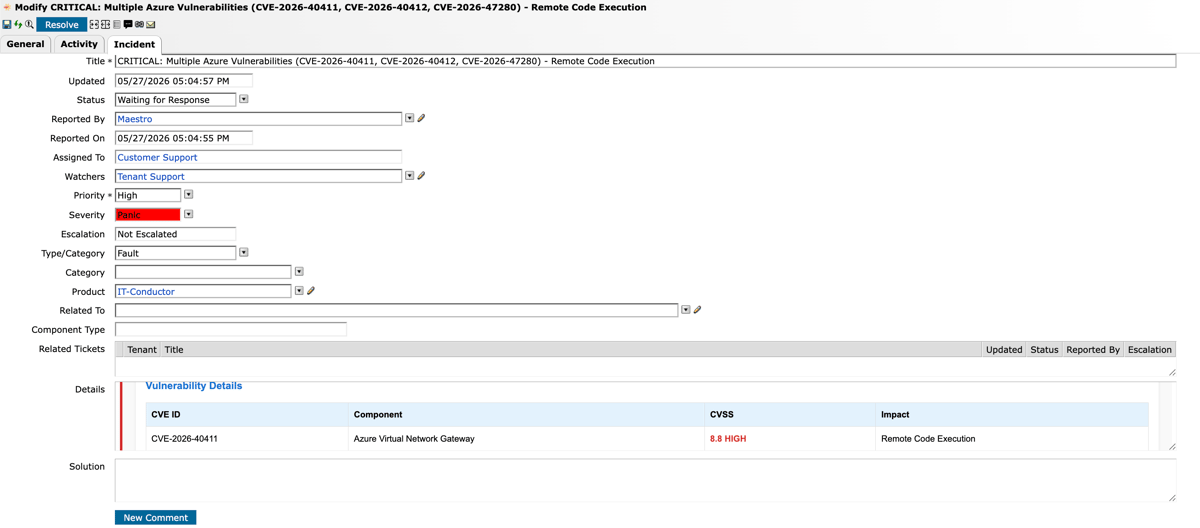
Figure 2: IT-Conductor Maestro Reported Multiple Azure Vulnerabilities
This helps organizations reduce manual operational effort while improving remediation response times and consistency across SAP environments.
3. SAP Security Notes remediation
Applying SAP Security Notes remains one of the most important and operationally intensive remediation activities for SAP customers because they must continuously:
- Identify missing security notes
- Evaluate business impact
- Test implementations in the sandbox or development systems
- Coordinate transports across the landscape
- Validate changes in QA before production deployment
With Maestro, organizations can automate parts of the SAP security note remediation workflow.
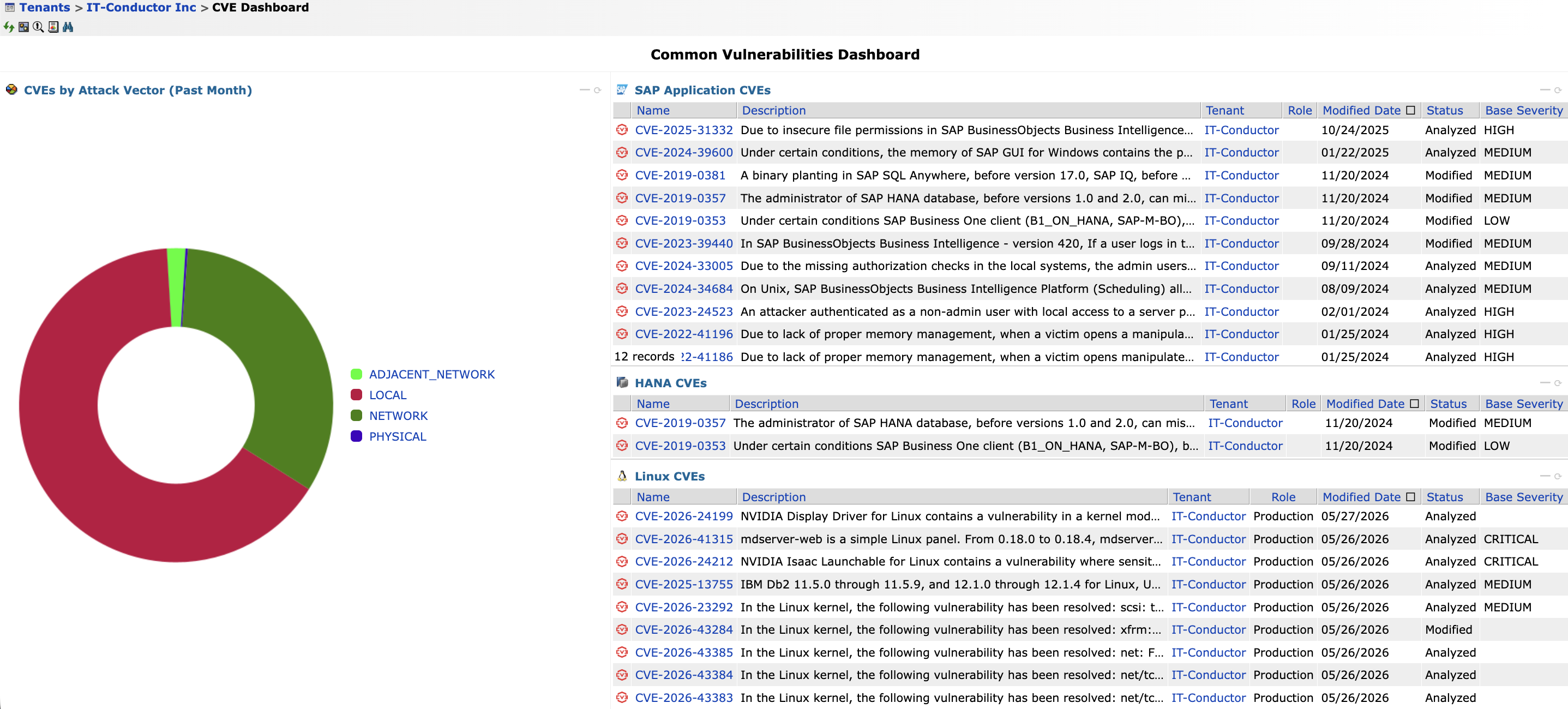
Figure 3: CVE Dashboard
SAP Security Notes can first be downloaded and compared against SAP systems to identify missing or applicable notes. From there, Maestro can automatically open change requests to implement the notes in the sandbox or development environments.
Once testing and validation are completed, the approved changes can then be transported into QA and production systems using IT-Conductor ChAI™.
However, fully automated deployment of SAP Security Notes is still not always practical because many note implementations involve interactive prompts and manual decision points during deployment.
To help reduce operational overhead, we at IT-Conductor can provide remote expert services that assist customers with SAP security note implementation and help automate downstream deployment activities across SAP landscapes.
4. Audit and compliance remediation
Many remediation activities are also driven by audit findings and compliance requirements which includes the following:
- Resolving audit observations
- Addressing policy violations
- Improving logging and monitoring
- Updating documentation and controls
- Validating remediation evidence for auditors
Organizations also need better operational visibility into privileged access, dormant accounts, RFC trust relationships, password aging, and critical system activities across SAP landscapes.
The example below shows how security audit log analysis can help identify high-risk users, insecure RFC connections, dormant privileged accounts, and compliance gaps that require remediation attention.
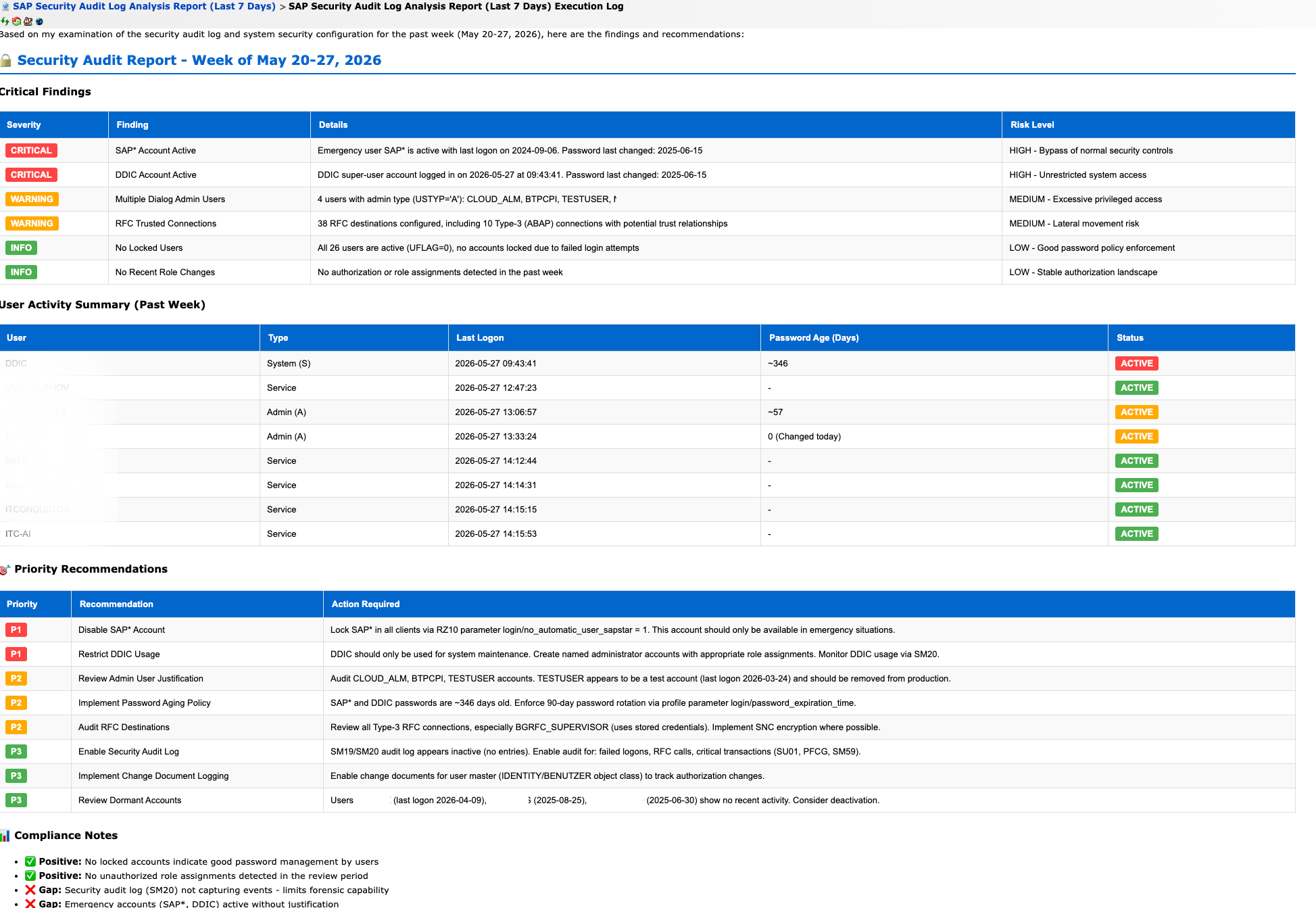 Figure 4: SAP Security Audit Log Analysis Report
With IT-Conductor Maestro, these findings can be connected directly to remediation workflows. Once a security analyst or administrator validates the finding and initiates the approved change request, Maestro can automatically orchestrate remediation activities such as:
- Disabling or locking critical users
- Deactivating dormant privileged accounts
- Removing excessive authorizations
- Triggering password reset workflows
- Disabling risky RFC destinations
- Enforcing security policy changes across SAP systems
This helps organizations accelerate remediation response times while maintaining governance, approval processes, and full audit traceability across the SAP landscape.
Modernize SAP security operations with IT-Conductor Maestro
Most SAP customers already know they have unresolved security findings sitting in their environments. The problem is that remediation often gets delayed until something forces action — an audit escalation, a ransomware attack, a compliance issue, or an actual security incident. That approach is becoming harder to sustain.
As SAP landscapes grow more interconnected and remediation backlogs continue to increase, SOC teams and SAP operations teams are being asked to do more with the same resources while still maintaining governance, uptime, and operational stability. Manual remediation processes simply do not scale well in modern SAP environments. Organizations that continue treating SAP security remediation as a periodic cleanup exercise will likely struggle to keep pace with the growing volume of security and operational risks across their landscapes.
Autonomous SAP security operations offer a different approach — one where repetitive remediation activities, anomaly response, and operational workflows can be streamlined through automation and agentic AI.
If you want to see what this looks like in practice, join our upcoming webinar to see Maestro in action across real SAP security remediation scenarios.
Register here