SAP Basis Automation
IT-Conductor Latest Automation Features Q3-2022
Welcome to the Q3-2022 edition of IT-Conductor’s latest automation features.
Welcome to the Q3 2026 edition of IT-Conductor's innovations in service orchestration and automation.
For SAP operations teams, identifying security vulnerabilities is only part of the challenge. Assessing their impact, prioritizing remediation, and implementing corrections across complex landscapes often require considerable time and coordination. At the same time, the growing adoption of AI assistants presents new opportunities to simplify how IT teams access operational information and interact with enterprise systems.
This edition highlights IT-Conductor's latest innovations, including centrally orchestrated SAP Security Note implementation, enhanced security governance with SecureOps, and the IT-Conductor MCP Server, which brings enterprise monitoring intelligence and authorized operational capabilities into familiar AI assistants.
IT-Conductor SecureOps extends SAP security management beyond vulnerability identification by bringing risk-based assessments, AI-assisted ticketing, governed remediation workflows, and automated SAP Security Note implementation together within a single operational platform.
While identifying applicable SAP Security Notes is essential, implementing them can involve several manual steps, including reviewing prerequisites, creating transport requests, applying corrections, and preparing changes for subsequent deployment. These activities become increasingly demanding when multiple SAP systems require remediation.
SecureOps helps organizations prioritize these activities through risk-based ranking of security findings, considering factors such as vulnerability severity, estimated remediation effort, and downtime requirements. By highlighting the most significant risk drivers and recommending remediation priorities, the platform enables SAP teams to focus on the vulnerabilities that require the greatest attention while planning corrective actions more effectively.
With IT-Conductor's released SAP Notes Management capability, users can initiate and manage note implementations remotely through a centrally orchestrated workflow.
 Figure 1: IT-Conductor SAP Notes Orchestration Dashboard
The dedicated SAP Notes Orchestration dashboard provides a consolidated view of implementable notes across monitored SAP systems, allowing users to initiate implementations directly from a central interface. The dashboard also displays note and processing statuses, implementation requests, execution outcomes, and recent activity by system and user, providing visibility into remediation operations across the landscape.
Once an implementation is initiated, the workflow handles transport request creation, SAP Note implementation, and transport release, reducing the need to perform these activities individually within SAP.
The capability supports both standalone SAP Notes and complex implementations involving multiple, nested prerequisites, which are handled automatically as part of the workflow. Where SAP requires additional confirmation or manual intervention, the process can accommodate these steps.
The workflows can also be customized to align with existing change management procedures, including approval checkpoints and controlled transport release. This allows organizations to benefit from automation while retaining oversight of changes before they progress through the SAP landscape.
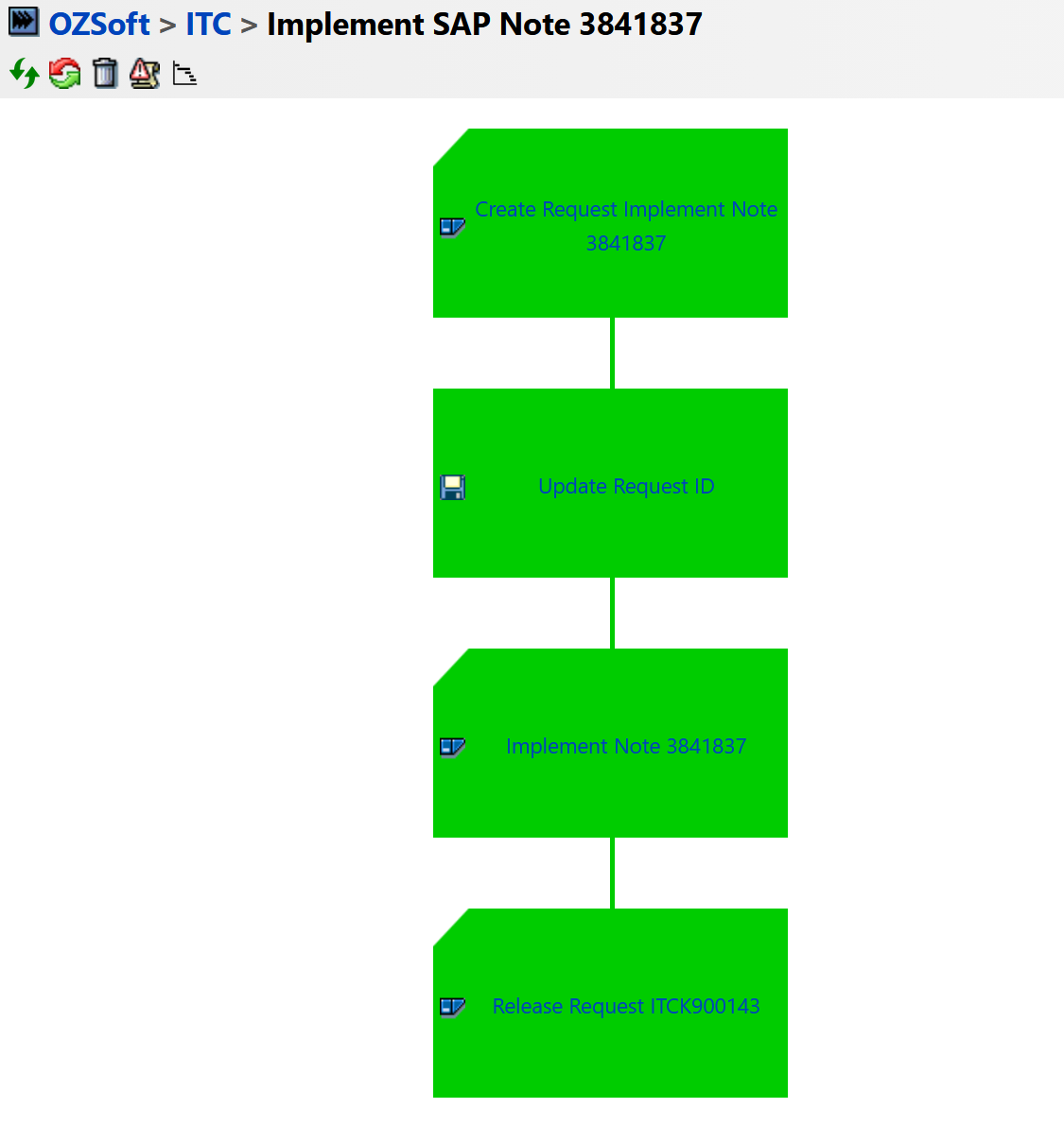 Figure 2: IT-Conductor SAP Note Workflow Implementation
By connecting prioritized security findings with automated implementation workflows, IT-Conductor provides a centrally orchestrated remote remediation platform where SAP teams can initiate corrections, track execution outcomes, and manage remediation activities across multiple systems from a single interface, while retaining control over downstream testing and deployment.
The transition to RISE with SAP changes how organizations manage their SAP environments, but it does not eliminate the need for effective security governance. Customers must still understand their security exposure, assess relevant vulnerabilities, coordinate remediation decisions, and maintain appropriate oversight of changes affecting business-critical systems.
IT-Conductor SecureOps complements existing SAP services by providing continuous security assessments and a consolidated view of findings across platform, application, configuration, and identity and access security.
Through its Security Resiliency Index (SRI), SecureOps evaluates security posture, while contextual risk assessments help prioritize findings beyond individual vulnerability severity ratings. This enables teams to focus on the security issues requiring the greatest attention.
AI-assisted analysis and ticket management further support the process by identifying findings requiring attention, generating remediation tasks, and tracking progress towards resolution.
 Figure 3: IT-Conductor SecureOps Dashboard showing Security Resiliency Scores, Historical Trends, and Remediation Tracking
For organizations operating SAP RISE environments, these capabilities help bridge the gap between security assessment and remediation coordination. By providing a consolidated view of risks, priorities, and corrective actions, SecureOps enables SAP operations, security, and change-management teams to work together more effectively while maintaining established approval processes and responsibilities.
IT-Conductor already provides centralized visibility across SAP applications, databases, operating systems, infrastructure, and enterprise services. The IT-Conductor MCP Server extends the value of this information by making monitored operational data and authorized platform capabilities accessible through AI assistants and agents.
Built on the Model Context Protocol (MCP), the server enables users to connect compatible AI tools, including ChatGPT, Claude, GitHub Copilot, Cursor, and custom AI agents, to IT-Conductor through a common interface.
Instead of navigating multiple monitoring dashboards or manually gathering information from different systems, users can ask operational questions directly from their preferred AI assistant.
For example, an SAP administrator could ask:
“Which production SAP systems currently have critical alerts?”
“Show me the HANA backup failures recorded this week.”
“Which SAP Security Notes are missing from our production landscape, and what CVEs are associated with them?”
The MCP Server provides access to the relevant information already collected and managed by IT-Conductor, allowing the assistant to respond using the context of the monitored environment.
Beyond retrieving information, authorized users can interact with supported operational capabilities, including incident management, maintenance scheduling, reporting, and automation workflows.
The following example demonstrates how an AI assistant retrieves SAP system information through the IT-Conductor MCP Server, from requesting permission to invoke an available tool to displaying the monitored systems and their maintenance status.
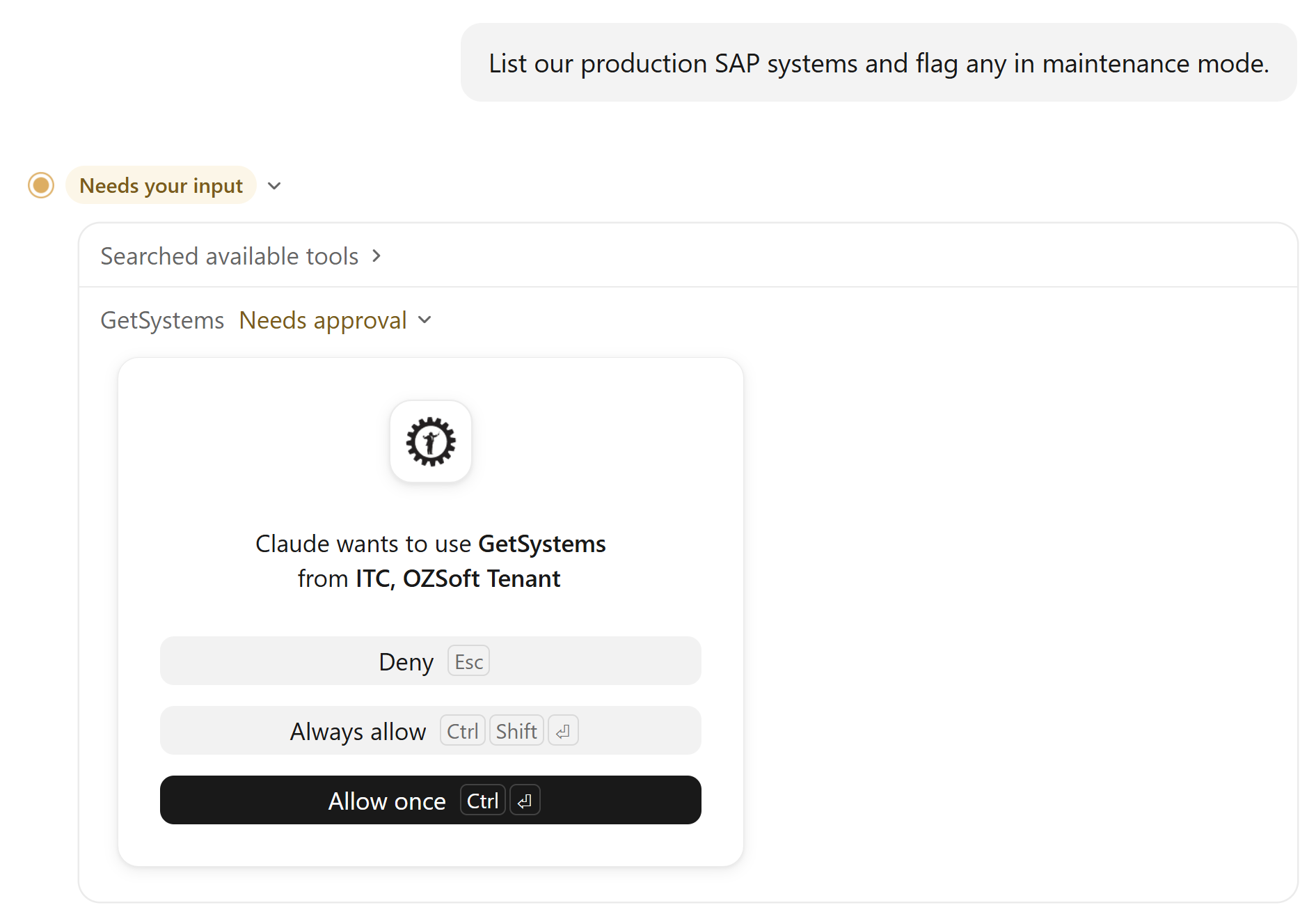 Figure 4: IT-Conductor MCP Server — AI Assistant Requesting Tool Execution Approval
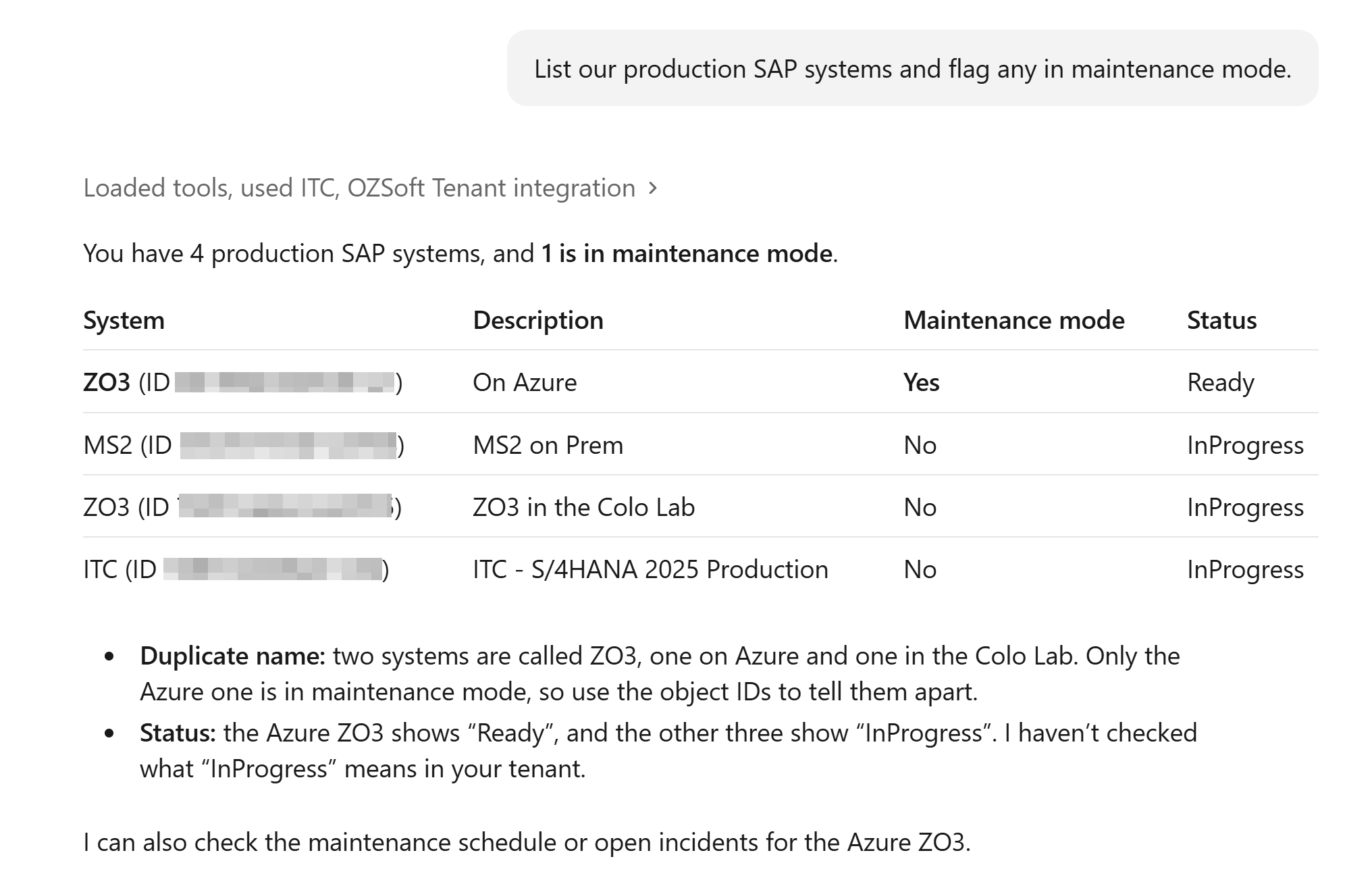 Figure 5: AI-Assisted SAP Landscape Visibility through IT-Conductor MCP Server
An important aspect of this integration is its security model. As illustrated in Figure 4, AI assistants such as Claude can request user approval before invoking IT-Conductor tools, providing an additional layer of control over tool execution. Separately, IT-Conductor enforces authentication, role-based permissions, and audit controls, ensuring that users and AI agents can only access information and perform actions within their authorized privileges. AI assistants do not require independent, direct connections to the underlying SAP systems, databases, or infrastructure, as access is mediated through the IT-Conductor platform.
The MCP Server also supports a dynamically managed tool catalogue. As additional capabilities become available within IT-Conductor, they can be exposed to connected assistants without requiring separate client-side integrations for every monitored system. Organizations can also define tenant-specific tools to make selected reports, operational data, and workflows accessible through their AI interfaces.
For SAP Basis, IT operations, and security teams, the IT-Conductor MCP Server brings operational intelligence directly into familiar AI assistants. Teams can retrieve system information, investigate alerts, review security findings, and initiate authorized actions through natural-language interactions, drawing on the monitoring data and capabilities already available within IT-Conductor.
Building on the release of automated SAP Note implementation, IT-Conductor is working on further enhancements to support more informed and controlled SAP remediation.
One area of development is automated reversal of SAP Note implementations, intended to simplify the process of reverting corrections when necessary. This would extend the current implementation workflow by providing greater flexibility in managing remediation outcomes.
Another focus is AI-assisted code impact analysis, aimed at identifying affected SAP objects, technical dependencies, and potentially impacted business processes before changes are implemented. The objective is to help SAP teams better understand the implications of security corrections, identify relevant testing requirements, and reduce the manual effort involved in impact assessment.
These developments are expected to strengthen the existing SecureOps remediation capabilities, with greater emphasis on change assessment, testing, and recovery.
Welcome to the Q3-2022 edition of IT-Conductor’s latest automation features.
Welcome to the Q3 edition of IT-Conductor's latest SOAP (Service Orchestration and Automation Platform) features. Read more on the blog.
Welcome to the Q3-2023 edition of IT-Conductor's latest automation features. We are thrilled to present some exciting releases from the past quarter.