SAP monitoring
The Next Evolution of SAP Operations
Visibility isn't enough for SAP cyber resilience. See how autonomous operations move teams from detection to remediation.
Why SAP security alone isn't enough. The real cost of SAP cyber incidents and the shift toward cyber resilience.
For years, SAP security has focused on a familiar set of priorities: applying Security Notes, managing user access, monitoring vulnerabilities, and maintaining compliance. These practices remain essential, but the threat landscape has evolved. Organizations today are expected not only to protect their SAP environments, but also to respond quickly, recover efficiently, and maintain business continuity when security events occur.
That broader capability is what cyber resilience is all about.
Recent industry developments reinforce this shift. SAP has continued to invest in sovereign cloud infrastructure, trusted Business AI, and security-focused cloud capabilities for regulated industries, reflecting growing demand for operational resilience, governance, and secure enterprise operations. At the same time, the broader cybersecurity industry is placing increasing emphasis on AI-assisted operations and resilience alongside traditional prevention.
In this blog post, we'll explore the changing role of SAP security, explain why cyber resilience is becoming a strategic priority, and introduce some of the ideas that we'll be discussing throughout our upcoming SAP Autonomous Cyber Operations webinar series.
Traditional SAP security is about lowering the odds of compromise: patching, hardening configurations, reviewing authorizations, watching for suspicious activity, staying compliant. These controls are still the foundation of any solid SAP security program. That hasn't changed.
Cyber resilience builds on top of that foundation. It starts from the assumption that vulnerabilities will keep showing up, patches will keep shipping, and attackers will keep finding new angles. So instead of judging success purely by how many threats got blocked, resilient organizations focus on how fast they can assess a new risk, pull the right teams together, fix it, confirm the fix worked, and keep operating with as little disruption as possible.
Alerts are going to happen. What sets resilient organizations apart is how quickly they turn an alert into action.
SAP isn't just another application running in the background.
It runs finance, manufacturing, procurement, supply chain, HR—the business itself. When a serious vulnerability hits an SAP landscape, the fallout isn't contained to IT. A slow response can mean operational disruption, financial exposure, regulatory risk, and reputational damage.
And fixing an SAP security issue is rarely a one-team job. Basis admins, security teams, infrastructure specialists, compliance officers, and change managers all have a stake in it, each with their own priorities and processes. Getting all of them moving in sync is often harder than finding the vulnerability in the first place.
Across these incidents, organizations typically experienced:
|
Impact Area |
Typical Consequence |
|
Revenue |
Lost sales from business interruption |
|
Operations |
Manufacturing or distribution downtime |
|
IT |
Emergency incident response and system rebuilds |
|
Legal |
Regulatory investigations and notification costs |
|
Cyber insurance |
Increased premiums |
|
Customers |
Loss of confidence and churn |
|
Brand |
Negative global media coverage |
|
Executives |
Board scrutiny and shareholder pressure |
Table 1: Business areas impacted by SAP
Industry studies estimate that a major SAP outage or SAP-focused cyber incident can cost:
$1M–5M/day for large manufacturers
$2M–10M/day for large retailers during peak trading
$10M–100M+ total recovery costs for severe ransomware events
5–15% short-term share price declines following disclosure for publicly traded companies (varies widely)
A notable trend over the past year is that attackers are increasingly targeting SAP directly, rather than viewing it as just another application. Modern campaigns seek to:
Exploit Internet-exposed SAP NetWeaver systems
Steal SAP credentials
Move laterally into Active Directory
Encrypt SAP application servers
Exfiltrate financial and customer data
Disrupt manufacturing, logistics, and supply-chain processes
This shift is particularly significant because SAP environments often contain the organization's most business-critical data and processes.
Most organizations already have decent visibility into their risks. Findings come in from SAP Security Notes, CVEs, vulnerability scanners, SIEM platforms, audits, and compliance reviews. Critical SAP vulnerabilities are disclosed regularly, so timely remediation isn't optional.
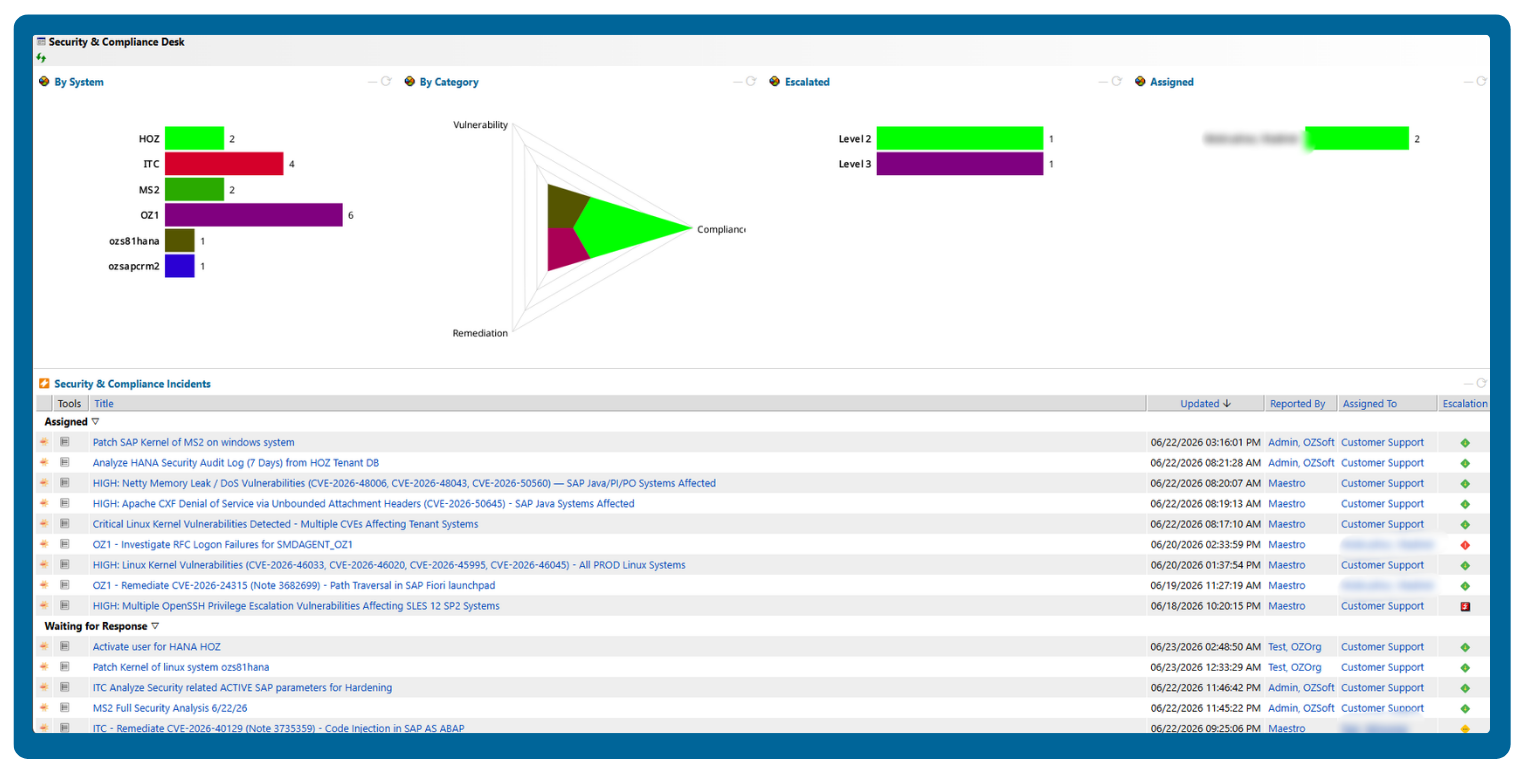 Figure 1: Security and Compliance Dashboard in IT-Conductor
The hard part starts after the finding lands. SAP teams have to figure out whether it even affects their landscape, weigh the business impact, decide what to prioritize, line up a maintenance window, get approvals, make the change, confirm it worked, and document all of it for audit purposes
Every manual handoff in that chain adds time between "we found a risk" and "we fixed it."
For most organizations, that operational gap—not a shortage of security tools—is where resilience actually breaks down.
Cyber resilience doesn't replace SAP security. It extends it. Security identifies and reduces risk. Resilience makes sure the response to that risk is consistent, fast, and repeatable at scale.
The broader cybersecurity industry is moving in the same direction. Earlier this year, the NIST National Cybersecurity Center of Excellence (NCCoE) published updated guidance demonstrating how security practices should be integrated directly into operational workflows through modern DevSecOps rather than treated as isolated activities. This reflects a broader shift across the industry, where security is becoming an integral part of daily operations rather than a separate discipline.
The same principle applies to SAP.
|
Traditional SAP Security |
SAP Cyber Resilience |
|---|---|
|
Find vulnerabilities |
Resolve vulnerabilities |
|
Generate alerts |
Coordinate response |
|
Measure exposure |
Reduce exposure |
|
Manual remediation |
Governed automation |
|
Point-in-time compliance |
Continuous validation |
|
Prevent attacks |
Continue operating through attacks |
Table 2: Differences between Traditional SAP Security and SAP Cyber Resilience
Dashboards and monitoring tools won't be enough going forward. Organizations will need the ability to analyze findings, prioritize what matters, orchestrate the fix, confirm it worked, and generate audit-ready evidence automatically. That's a real shift in how SAP security gets managed.
As SAP landscapes become increasingly interconnected, cloud-enabled, and AI-driven, the operational demands placed on security teams continue to grow. Organizations need more than visibility into security findings. They need a repeatable, governed way to turn those findings into action.
That's the idea behind SAP Autonomous Cyber Operations (SACO).
Over the coming weeks, we'll be exploring this concept in depth through our new SAP Autonomous Cyber Operations Webinar Series, where we'll discuss the technologies, operating models, and automation strategies shaping the future of SAP cybersecurity.
Our next session, Why SAP Needs Its Own Cyber Operations Platform, takes place next week on July 22nd, and examines why traditional SOC, SIEM, and SOAR platforms were never designed for SAP. We'll introduce the concept of SAP Autonomous Cyber Operations and explain why business-critical SAP environments deserve their own operational discipline.
Registration is free for all!
 Figure 2: Register for the "Why SAP needs its own cyber operations platform" webinar
Cyber resilience represents the natural evolution of SAP security.
Strong preventive controls, timely patching, solid identity management, continuous monitoring—none of that goes away. What's changing is the expectation for what happens after a security finding shows up.
As SAP environments get more complex, how fast and consistently a team responds will matter just as much as how good their preventive controls are. Security teams, SAP teams, infrastructure specialists, and compliance functions need repeatable, well-governed processes that cut down manual work while building confidence in every decision made.
This shift is already happening across the industry. The organizations that get ahead of it will be better positioned to handle future threats, keep the business running, and prove their resilience when it counts.
For SAP leaders, the conversation isn't just about protecting systems anymore. It's about building the operational muscle to respond, recover, and keep improving. That's where SAP cybersecurity is headed, and it's what we'll keep exploring throughout the SAP Autonomous Cyber Operations webinar series.
Visibility isn't enough for SAP cyber resilience. See how autonomous operations move teams from detection to remediation.
How autonomous cyber resilience is transforming SAP security operations. From vulnerability detection to orchestrated remediation.
On June 24th, we hosted a webinar exploring autonomy in SAP cybersecurity, from detecting risks to remediating and verifying closure.