Cybersecurity events are not always preventable, but their likelihood, scope, and impact can be reduced when organizations have the right visibility, workflows, and controls in place.
For SAP customers, resilience means using the tools, resources, and processes available to defend critical systems against cyber threats and security issues that can extend far beyond financial loss. A successful attack can disrupt operations, expose sensitive data, damage customer trust, and create long-term reputational consequences.
In our recent webinar, Autonomous Cyber Resilience for SAP Operations, the discussion focused on a familiar challenge for many SAP teams: remediation backlogs. Security findings often continue to grow when they cannot be quickly validated, prioritized, assigned, implemented, and proven as resolved.
Closing the gap between security findings and remediation
Cyber resilience depends on how quickly teams can turn security findings into coordinated remediation. Alerts, audit logs, SAP Security Notes, Common Vulnerabilities and Exposures (CVEs), and EarlyWatch findings may reveal where risks exist, but those risks remain until teams can analyze, assign, remediate, and validate each issue.
Moreover, security findings often move across cybersecurity, infrastructure, and application teams before they can be fully resolved. Oftentimes, external consultants and managed service providers (MSPs) are also involved, creating more delays in the process.
Closing the gap between security findings and remediation activities requires ownership, workflow coordination, execution, and evidence collection. Without a structured way to manage those steps, even known risks can remain open longer than they should.
SAP cyber resilience framework
In the webinar, Linh described SAP cyber resilience as an end-to-end process that moves security findings through five key stages:
Detect → Analyze → Decide → Remediate → Verify
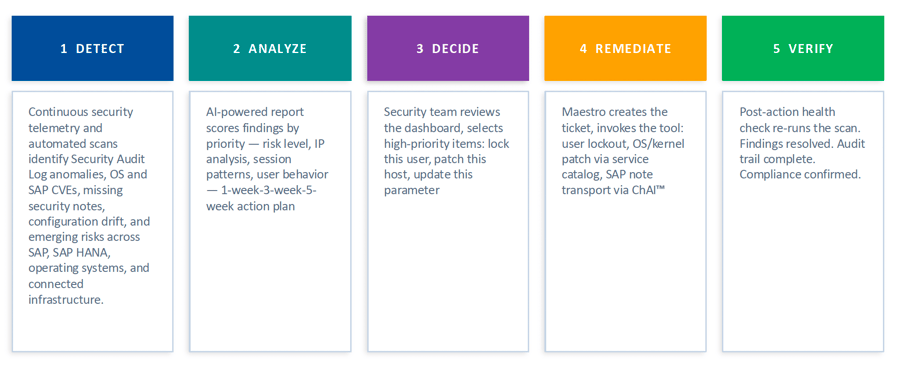
Figure 1: SAP Cyber Resilience Framework
Each stage helps SAP teams move from detecting a potential risk to verifying that the issue has been resolved and documented.
1. Detect
The process begins with detection through continuous monitoring of security telemetry and automated scans. Findings may come from SAP security audit logs, OS and SAP CVEs, missing SAP Security Notes, configuration drift, etc.
At this stage, the goal is to surface risks across the SAP landscape before they become larger operational or compliance issues. But detection alone is not enough. SAP teams still need to understand whether the finding applies to their environment and which systems, users, components, or business processes may be affected.
2. Analyze
Once findings are detected, they need to be analyzed and prioritized.
In the webinar, Linh showed how AI-powered analysis can help score findings based on factors such as risk level, IP analysis, session patterns, and user behavior. This analysis gives teams a clearer view of which issues require immediate action, which can be addressed over the next few weeks, and which may need a longer-term remediation plan.
3. Decide
After analysis, security teams need to decide what action to take. This may involve reviewing the security dashboard, selecting high-priority items, and determining the right response for each issue.
For example, the decision may be to lock a suspicious user, patch an affected host, update a security parameter, implement a SAP Note, or route the finding through a change process.
4. Remediate
Remediation is where approved actions are executed. This step turns the remediation plan into controlled action, whether that means locking a user, updating a parameter, applying a patch, or implementing a SAP Note. Because SAP environments are interconnected, even a single security fix may need to move through development, QA, and production before it can be considered complete.
Unlike traditional SAP monitoring solutions that primarily focus on detecting issues and generating alerts, IT-Conductor extends the process through the entire remediation lifecycle. Once a security finding is identified, IT-Conductor Maestro™ can initiate workflows, assign ownership, integrate with ITSM platforms, and orchestrate approved remediation activities. Whether locking a user, applying an OS or SAP kernel patch through a service catalog, updating a configuration parameter, or moving an SAP Note transport through IT-Conductor ChAI™, the platform helps coordinate execution while maintaining workflow status, change control, and audit evidence for compliance.
5. Verify
The lifecycle ends with verification. After remediation, teams need to rerun health checks, confirm whether the finding has been resolved, complete the audit trail, and validate compliance status. This final step is critical because it proves that the fix worked and that the system is now compliant.
By bringing these five stages into one coordinated workflow, IT-Conductor helps SAP teams close the loop between security findings and compliance evidence. This reduces manual follow-up, strengthens accountability, and helps ensure that known risks do not remain open longer than necessary.
See autonomous SAP security operations in action
The use cases demonstrated in the webinar were based in common SAP security scenarios where administrators need to review findings, coordinate action, and prove remediation.
In the demo, Linh showed how IT-Conductor supports SAP cyber resilience as one end-to-end platform for detecting risks, analyzing their relevance, deciding the right course of action, remediating through approved workflows, and verifying whether each issue has been resolved.
Building cyber resilience across SAP operations
SAP security findings are only useful when teams can act on them. The faster organizations can detect, analyze, decide, remediate, and verify, the better positioned they are to reduce risk and strengthen cyber resilience.
In SAP environments, a security finding may involve multiple systems, teams, change processes, and validation steps before it can be fully closed. Without a closed-loop framework in place, even known risks can remain unresolved because ownership is unclear, remediation is delayed, or evidence is difficult to produce after the fact.
By bringing these steps into one end-to-end process, IT-Conductor helps SAP teams move from fragmented remediation efforts to a more coordinated, accountable, and auditable approach to security operations.
