For decades, enterprise integration has largely been defined by APIs. If systems needed to communicate, developers exposed endpoints, middleware orchestrated workflows, and applications exchanged data through carefully controlled interfaces. In SAP environments, enterprise integration evolved through technologies such as RFCs, BAPIs, IDocs, OData services, CDS views, SAP Integration Suite, event-driven architectures, and API management platforms. Together, these technologies became the connective tissue of the modern enterprise.
That is not changing. What is changing, however, is the layer forming above APIs.
The rise of AI agents, MCP (Model Context Protocol), semantic orchestration, and enterprise copilots is fundamentally altering how enterprise systems are consumed, coordinated, and interacted with. APIs are no longer just technical endpoints for applications. Increasingly, they are becoming governed capability layers inside AI-native orchestration environments.
The next era of enterprise integration is APIs combined with intelligent orchestration.
APIs are becoming governed enterprise infrastructure
Historically, APIs were viewed primarily as developer tools that exposed transactions, business objects, workflows, and data services so enterprise systems could communicate with one another. In SAP environments, APIs enabled organizations to connect applications, move data, automate processes, and standardize integrations.
For many years, enterprise integration strategy focused mainly on technical interoperability, ensuring systems could reliably exchange information through predictable and well-defined interfaces. Integration architectures were typically deterministic, meaning workflows were predefined, integrations were predictable, and API consumers were known ahead of time.
However, the recently updated SAP API Policy suggests a broader architectural shift beyond simple connectivity. The document discusses:
- Published and Non-Published APIs
- Documented use and restrictions around non-documented interfaces
This indicates that APIs are no longer viewed purely as technical interfaces but also as operational and governance boundaries. As AI-driven automation and orchestration become more common, APIs increasingly serve as control points for security, lifecycle management, operational stability, and policy enforcement across enterprise ecosystems.
The timing is especially important as AI agents rapidly emerge as autonomous consumers of enterprise systems. Instead of humans invoking APIs one transaction at a time, intelligent systems can now:
- Sequence API calls dynamically
- Coordinate workflows autonomously
- Invoke tools continuously
- Reason across systems
- Interact with enterprise applications semantically
This changes the economics and operational assumptions of enterprise integration entirely.
This fundamentally changes the operational assumptions of enterprise integration. APIs remain foundational, but they are now part of a much larger orchestration model involving AI agents, governance frameworks, semantic tooling, and intelligent runtime coordination.
APIs were designed for applications, not autonomous agents
Traditional integration architectures were designed around relatively predictable behavior.
Applications typically called known endpoints, executed deterministic workflows, followed predefined orchestration logic, and operated at human-driven interaction speeds. Even large-scale enterprise middleware environments generally assumed that integrations would remain finite, observable, and understandable, with workflows carefully modeled and controlled by developers and integration teams.
AI agents fundamentally challenge those assumptions. Unlike traditional applications that follow static workflows, AI orchestration layers can dynamically determine how to interact with enterprise systems at runtime.
An intelligent agent may:
- Dynamically select tools
- Decide which APIs to invoke
- Plan multi-step operations
- Coordinate across platforms
- Continuously monitor environments
- Adapt behavior based on context
This introduces a far more adaptive and autonomous interaction model than traditional enterprise integration architectures were originally designed to support.
For example, an operational AI agent could detect a failed SAP interface, correlate the issue with cloud infrastructure telemetry, trigger remediation workflows, open an ITSM ticket, and notify support teams without predefined orchestration paths.
MCP introduces a new enterprise interaction layer
Model Context Protocol (MCP) is becoming one of the most interesting developments in AI architecture. It provides a standardized way for AI systems to discover tools, access context, invoke capabilities, coordinate workflows, and reason across systems. In many ways, MCP acts as an orchestration abstraction layer above traditional APIs, allowing intelligent systems to interact with enterprise capabilities in a more dynamic and contextual manner.
The emergence of MCP-based architectures illustrates the broader shift happening today. Rather than treating APIs as isolated technical endpoints, MCP-style orchestration exposes enterprise capabilities as discoverable tools that intelligent systems can reason about and coordinate dynamically. Under this model, integration is no longer limited to predefined application-to-application communication. Instead, it evolves into an intelligent orchestration layer where agents interact with enterprise systems dynamically across platforms, workflows, and operational contexts.
AWS recently brought this concept into the SAP ecosystem with the AWS for SAP Management MCP Server, which exposes SAP operational tooling through an MCP-compatible interface. The MCP server shows how MCP-compatible architectures can expose enterprise operational capabilities to intelligent orchestration layers.
SAPPHIRE 2026 announced SAP Business AI platform
At SAPPHIRE’s Partner Summit, SAP pre-announced to partners the new Business AI Platform a day before the official SAPPHIRE keynote by Christian Klein. This new SAP platform combines Agents, Apps and Data to connect to SAP Knowledge Graph which provides Contexts and Reason to power the Autonomous Enterprise applications. These announcements are highly dependent to the use of SAP API.
SAP’s AI Golden Path strongly points at this emerging direction. Few days before SAP Sapphire, I hosted a podcast discussion with peers from the SAP community where we explored same themes from AI agents, MCP, and the growing tension in the community related to SAP’s new API policy.
Many of the ideas discussed in that conversation resurfaced during SAP Sapphire, where I attended several roadmap and architecture sessions that consistently highlighted interoperability, orchestration layers, and hybrid enterprise AI architectures. Technologies such as SAP AI Core, Generative AI Hub, SAP HANA Cloud Vector Engine, Joule, and Joule Studio collectively reinforce this broader AI-native enterprise architecture model. These services go beyond enabling simple copilots or embedded LLM prompts. Together, they form the foundation for orchestrated AI ecosystems, governed runtime environments, enterprise reasoning systems, and operational AI layers capable of coordinating workflows and enterprise capabilities more dynamically.
A recurring takeaway from both the podcast discussion and SAP Sapphire was that the future of enterprise integration is no longer just about connecting systems through APIs, but increasingly about how intelligent orchestration layers will safely coordinate enterprise capabilities across platforms, workflows, and operational environments. This broader architectural direction becomes especially important when viewed alongside the ongoing API policy discussions across the SAP ecosystem. Taken together, SAP’s evolving strategy suggests a growing focus not just on application integration, but on how intelligent systems will safely orchestrate, govern, and interact with enterprise platforms at scale.
The future of enterprise integration is intelligent orchestration
The demand for AI capabilities continues to accelerate as organizations pursue copilots, workflow automation, semantic enterprise search, AI-assisted reporting, and autonomous operations — all converging toward a broader model of intelligent orchestration. At the same time, many SAP customers still operate ECC systems, hybrid landscapes, highly customized environments, private cloud deployments, and complex enterprise integration architectures. This creates a growing gap between AI adoption timelines and ERP modernization timelines, forcing a new architectural reality where intelligent systems must operate across heterogeneous enterprise environments rather than waiting for transformation programs to complete.
APIs will continue to serve as the backbone of enterprise integration, but they are evolving beyond simple connectivity endpoints into governed capability layers that intelligent systems can orchestrate dynamically. Emerging technologies such as AI agents, MCP ecosystems, and orchestration layers are expanding the integration stack around APIs rather than replacing them. As a result, enterprise integration becomes an intelligent coordination layer where agents interact with systems, workflows, and operational contexts dynamically across platforms.
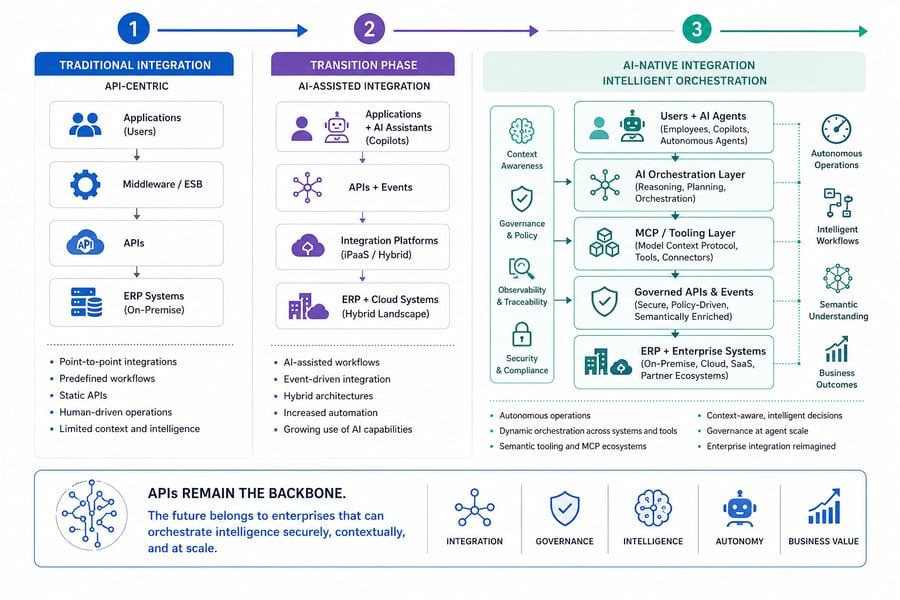 Figure 1: Evolution of Enterprise Integration
At the same time, the rise of autonomous operations makes governance more important than ever. Intelligent agents capable of recursive workflows, dynamic API sequencing, operational decision-making, and cross-platform orchestration introduce entirely new requirements around observability, tracing, runtime governance, access control, auditing, and policy enforcement. The challenge is no longer simply whether systems can integrate, but whether enterprises can safely orchestrate intelligence at scale.
Intelligent orchestration requires operational governance
SAPPHIRE emphasized autonomous enterprises. It’s clear that orchestration is core to redesign of SAP’s Business AI Platform. As enterprises move toward AI-native operations, orchestration becomes far more than workflow automation. Intelligent systems require runtime governance, observability, policy enforcement, auditability, and operational coordination across increasingly distributed environments. This is especially critical in SAP landscapes, where enterprise processes span ERP systems, cloud platforms, infrastructure layers, integration middleware, and external ecosystems.
Platforms like IT-Conductor are increasingly positioned at this orchestration layer, helping organizations coordinate operational workflows, automate cross-platform processes, improve observability, and establish governed automation frameworks across hybrid enterprise environments.
As AI agents become more capable, the ability to safely orchestrate enterprise operations at scale may become just as important as the AI models themselves.
